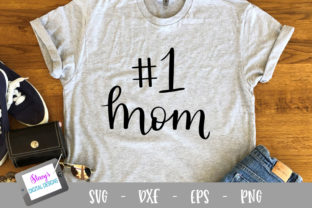
Review: Mom - Number One Mom - Handlettered
As a designer who has spent years turning digital files into tangible, stitched goods, I approach every new asset with a critical eye. The market is flooded with generic text and clip art, so finding a piece that truly elevates a handmade product requires careful scrutiny. Today, I am evaluating Mom - Number One Mom - Handlettered. At first glance, this design promises the warmth of a personal touch, but does it hold up under the pressure of real-world embroidery applications? Let's dive into how this handlettered graphic performs when moved from the screen to the hoop.
The Visual Personality and First Impression
When you open the file for Mom - Number One Mom - Handlettered, the immediate feeling is one of organic charm. Unlike rigid, blocky fonts that can feel cold on fabric, this handlettered style mimics the flow of a human hand. The curves are soft, and the spacing feels intentional rather than mechanical. For an Etsy seller or a boutique owner looking to create a brand identity that feels authentic, this aesthetic is gold. It screams "personalized gift" without needing any additional embellishment.
However, the transition from a crisp SVG file used in cutting machines like Cricut or Silhouette to a complex machine embroidery design is where the real test begins. While the description highlights its utility for cutting machines, we must consider how those vector lines translate into thread. The fluid nature of the lettering suggests a need for precise digitization if you plan to stitch it. If the curves are too tight or the letterforms too thin, they may struggle to maintain their integrity during the stitching process.
Real-World Application: From File to Fabric
Imagine you are preparing a custom embroidered tote bag for a Mother's Day collection. You want something that stands out against the canvas texture. Placing Mom - Number One Mom - Handlettered on a sturdy tote bag offers a fantastic opportunity. The boldness of the phrase "Number One Mom" combined with the whimsical font creates a focal point that draws the eye immediately. In this context, the design works beautifully as a statement piece. The visual weight of the text ensures it remains legible even from a distance, which is crucial for items like tote bags or aprons worn in public spaces.
Consider another scenario: a personalized sweatshirt for a new mother. Here, the placement becomes key. Because the design is text-heavy, centering it on the chest allows the message to shine. However, if you were to attempt this on a baby item, such as a onesie, you would need to be cautious. The intricate details of the handlettering might get lost in the small scale or the stretchy nature of infant fabrics. A larger hoop size is likely necessary to preserve the delicate strokes of the letters, ensuring the final result doesn't look muddy or distorted.
For those creating embroidered patches, this design offers a unique edge. Patches often rely on bold outlines and dense fill stitches. The organic shapes of Mom - Number One Mom - Handlettered could make for a very stylish patch, provided the digitizer pays close attention to the stitch density. Too much density in the thinner parts of the letters could cause puckering, while too little might leave gaps in the thread coverage. Testing the design on scrap fabric is non-negotiable here.
Navigating Challenges: Where Caution Is Required
While the design is versatile, it is not a magic bullet for every project. There are specific situations where Mom - Number One Mom - Handlettered requires extra care. Textured fabrics, such as heavy denim or thick fleece, can interfere with the fine details of handlettered scripts. The needle might skip over raised threads in the fabric, causing the delicate serifs and curves to break down. In these cases, using a high-quality stabilizer is essential to create a smooth surface for the needle to penetrate.
Dark fabrics present another challenge. If you are embroidering this design on a black sweatshirt or navy blue pillow cover, the contrast between the thread colors and the background will dictate the success of the project. Light-colored threads are generally best for dark fabrics, but you must ensure the fill stitch is dense enough to completely cover the background. Any show-through can ruin the professional look of the finished product. Additionally, curved surfaces like caps require specialized digitizing techniques. The natural flow of the handlettering might warp if the cap's curvature isn't accounted for in the setup.
Small hoop sizes are also a potential pitfall. If you try to fit the entire phrase into a 4x4 inch hoop, the lettering will likely become cramped and illegible. The beauty of this design lies in its flow; compressing it defeats its purpose. Always check the dimensions of your design against your available hoop space before committing to a project.
Practical Designer Notes for Success
To get the most out of Mom - Number One Mom - Handlettered, follow these practical steps. First, always test the design on a scrap piece of the actual fabric you intend to use. This allows you to adjust tension, thread colors, and stabilizer choices before ruining a customer's order. Second, review the stitch count and density settings. If the design was originally intended for vinyl cutting, you may need to have it professionally digitized into an embroidery format to ensure the satin and fill stitches work correctly.
Think about the commercial implications. If you are a small shop product creator, ensure you understand the licensing terms. Can you sell the finished embroidered items? Can you use the design in printable mockups for your online store? Clarifying these details protects your business and builds trust with your customers. Furthermore, consider the longevity of the product. Items that undergo frequent washing, like kitchen towels or tea towels, need robust stitching. Ensure the design is secure and won't fray over time.
Finally, don't underestimate the power of presentation. When photographing your finished projects, use good lighting to highlight the texture of the thread and the clarity of the lettering. Show the design on different backgrounds—light and dark—to give potential buyers a clear idea of how it looks. By treating Mom - Number One Mom - Handlettered with the respect it deserves as a premium design asset, you can create custom apparel and gifts that truly resonate with recipients.
In conclusion, this design offers a wonderful blend of sentiment and style. With the right preparation and attention to detail, it can become a staple in your craft business portfolio, delivering high-quality, heartfelt results that customers will cherish.